
Merchandise That Works: How to Choose Promotional Items People Actually Use
Which promotional items end up in daily use rather than a drawer: audience, usefulness, quality, design, quantity and timing. With a checklist for your project.
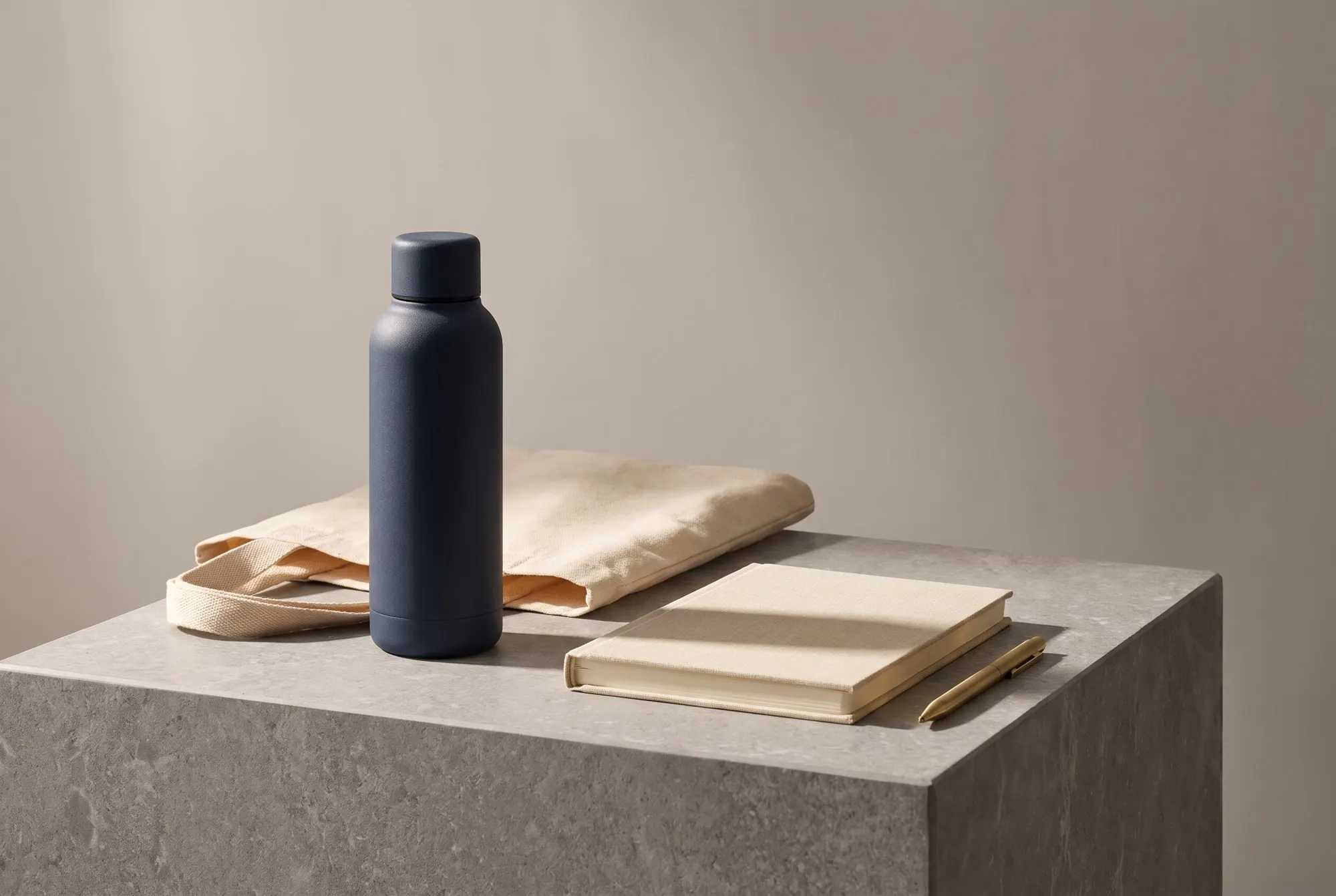
Many promotional items end up in a drawer after the trade fair, and that is where they stay. Others accompany their owners for years and show your logo every single day. The difference rarely lies in the budget, but in the choice. With these questions, you will find merchandise that gets used.
1. Who is the item for?
A promotional gift for existing customers needs something different from a giveaway at a trade fair stand or a welcome pack for new employees. Think about where people will use the item: in the office, on the go, at the gym, in the practice or at home. The more precisely you know this, the better your choice will fit.
2. Does it solve a small everyday problem?
The best promotional items are useful. A bag people really take shopping, a bottle that doesn’t leak, a notebook with good paper. Ask yourself with every suggestion: would I use this myself? If not, your target audience probably won’t either.
3. Does it suit your brand?
A promotional item is a piece of your brand people can hold in their hands. A dental practice can surprise people with an item related to oral care, a café with something for coffee on the go, a law firm with high-quality writing instruments. One example from our own development is Floss Cards, business cards with dental floss.
4. Is the quality right?
A cheap-looking item says something about your business, even if you don’t want it to. Better fewer pieces in good quality than many that break after a week. Ask to see a sample before ordering and check the material, workmanship and print.
5. Is the design well thought out?
Logo, colours and typeface should match your corporate design. Make sure the logo is available as a vector file, the colours work on the material in question and fine details remain recognisable even at a small size. A calm, understated design often looks more premium than a large logo.
6. How does the item reach people?
Handed over, posted or laid out at the stand: the way it is handed over is part of its impact. Suitable packaging, a short card or a QR code to your website turn an object into a reason to engage with you.
Checklist for your merchandise project
- Target audience and occasion defined
- Items with genuine everyday usefulness selected
- Sample held in your hands and quality checked
- Logo as a vector file, colours matched to the material
- Quantity planned according to actual need
- Schedule with a buffer for design, approval, production and shipping
- Handover and packaging considered
Similar rules apply to print materials such as business cards, flyers or paper bags: quality and a cohesive design carry your brand further.
Merchandise and print materials from Potsdam
We design and produce print materials and merchandise to match your brand, from the idea through the sample to delivery. As a marketing agency from Potsdam, we think about promotional items together with your website, design and social media. Talk to us in a free initial consultation or write to us via the contact form.
FAQ
Which promotional items are used most often?
Things that have a fixed place in everyday life: bags, water bottles, pens, notebooks, textiles or small helpers for the desk and on the go. What matters is that the item suits the target audience and is good enough that people enjoy using it.
How much lead time do I need for merchandise?
Allow several weeks, and more for custom items or larger quantities. Design, approval, production and shipping each take time. For trade fairs, anniversaries or Christmas, it pays to start early.
Should the logo be as large as possible on the item?
Usually not. A subtly placed logo or an attractive design is more likely to make people happy to show and use the item. A huge logo quickly turns an everyday object into pure advertising that nobody wants to carry around.